Polyclinic software for multi-doctor clinics and group practices: a live queue per doctor
Multi-doctor clinic software, done as a queue rather than a records system, is one live queue per doctor and one desk for all of them. A two-doctor polyclinic isn't twice the operational load of a single-doctor practice: it's closer to four times, because every patient interaction has to decide which doctor and when. Most queue tools assume one doctor and break the moment you add a second. TOKENN is WhatsApp token booking for polyclinics and group practices: one clinic number, one front desk, a live queue per doctor.
What multi-doctor clinic software actually has to manage
Multi-doctor clinic software runs a separate live queue per doctor or department (each with its own token series, timings and QR) behind one shared booking funnel and one reception dashboard. The test is whether a single receptionist can route WhatsApp bookings and walk-ins to the right doctor without patients ever seeing two competing lines.
The polyclinic management software problem: five doctors, one desk
When you have a paediatrician and a GP under one roof, the reception desk becomes a switchboard. Every walk-in needs sorting; every WhatsApp ping needs routing. The doctor who shows up late blocks the schedule for both queues. Paper slips collapse under this: they need a single source of truth that every staff member sees.
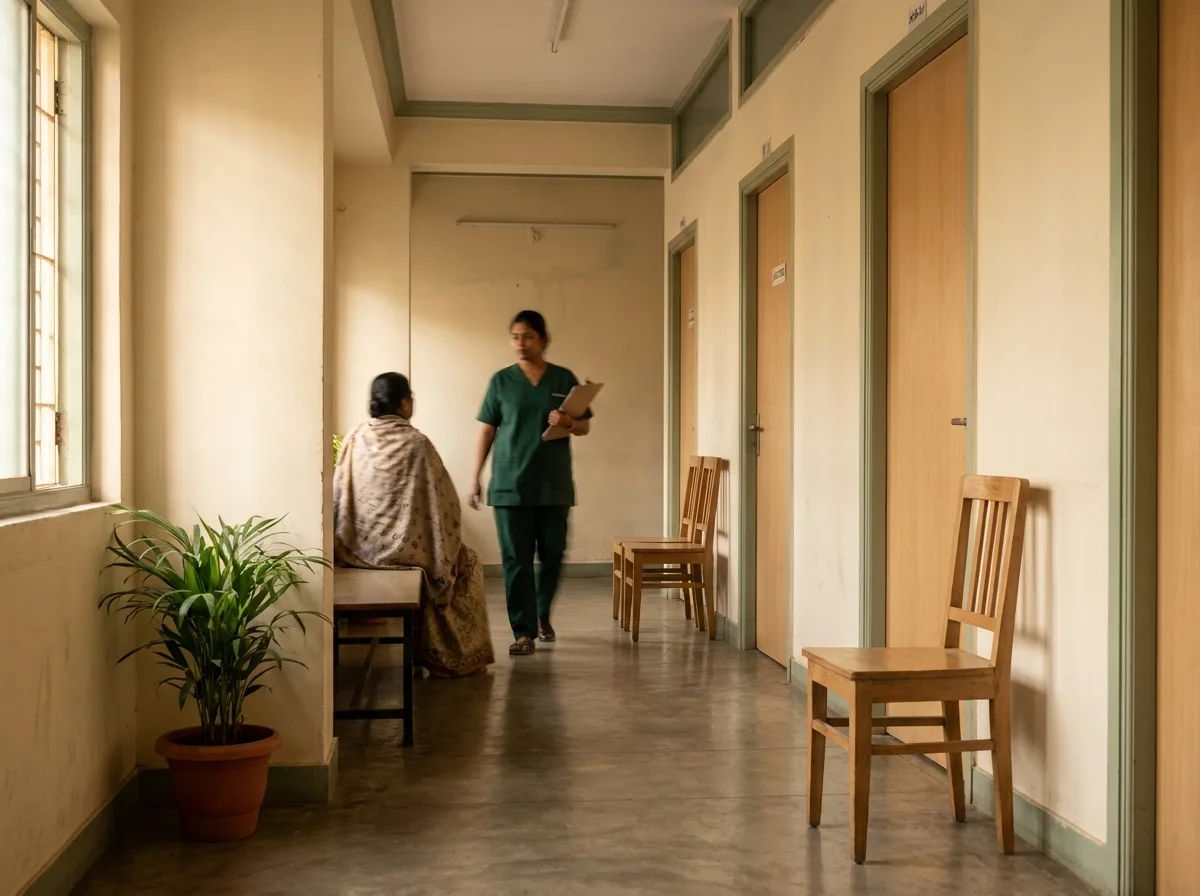
How TOKENN handles a multi-doctor day
Each doctor has their own queue with their own token series. Reception issues walk-ins into the right queue in two taps. WhatsApp bookings are tagged by the patient (or by reception) and routed to the right doctor before a token is even issued. The waiting-room display shows the now-serving token for each doctor side-by-side.
Owners see consolidated daily analytics (total patients seen across all doctors, no-show rate, average wait) plus per-doctor breakdowns. Staff have role-based access: a receptionist sees both queues, a doctor sees only their own by default. Each doctor's queue opens and closes on that doctor's own hours, so an evening-only consultant's line does not sit open all morning collecting tokens nobody can serve.
Polyclinic token system pricing for groups
One clinic account covers unlimited staff and every department, at ₹1 per token. For clinic chains with separate physical locations, there's a per-location add-on; reach out and we'll set it up.
A multi-doctor appointment system without friction: routing to the right doctor
The trickiest moment in any polyclinic is the very first message, a patient messages the shared clinic number, and something has to decide which doctor's queue they belong in. TOKENN's AI asks a short, natural clarifying question when it is not obvious ("Which doctor would you like to see, Dr. Sharma or Dr. Iyer?") and routes the token accordingly. Patients who already know which department they need, because they scanned that department's own QR on the cabin door, skip the question entirely and go straight into the right queue.
What changes for the doctors themselves
Each doctor gets their own queue, their own token series, and their own view of the dashboard by default: a doctor sees their own patients unless explicitly given visibility into others. This matters in group practices where doctors are effectively running independent practices under one roof: nobody wants their queue mixed with a colleague's, and nobody wants to hunt through another doctor's patient list to find their own. Per-doctor consult-time settings mean a pediatrician's 8-minute average and a physician's 15-minute average both produce honest wait estimates, rather than one blended number that is wrong for everyone. A doctor who wants to see the next patient early taps call-next on her own queue and nothing happens to anyone else's; a doctor who is held up by a long case sees her own estimates stretch while her colleague's stay honest. The two never have to negotiate at the desk, because the desk is no longer the thing that decides who is next.
Reception's view: one dashboard, every queue
While each doctor sees their own queue by default, reception needs the opposite view, every doctor's queue, all at once, so a walk-in can be issued into the right one in two taps regardless of which doctor they are seeing. The waiting-room display mirrors this: multiple doctors' now-serving tokens shown side by side on one screen, so a patient waiting for Dr. Iyer isn't confused by Dr. Sharma's number being called. The desk never has to ask which doctor a patient is waiting for, because the token already says so, and never has to guess whether Dr. Iyer is running late, because her queue's estimate says that too. One screen, every queue, and the receptionist's attention goes to the patient in front of her rather than to the whiteboard.
Group practice queue management: growing from two doctors to a full polyclinic
The model scales the same way whether a practice has two doctors or eight: adding a new doctor or department is another queue configured in minutes, not a system redesign. Diagnostic labs, physiotherapy rooms, and dental chairs within the same building can each be modelled as their own department alongside the doctors, all visible on reception's single dashboard and all bookable through the same one WhatsApp number patients already have saved.
Handling the doctor who runs consistently late
Every polyclinic has one doctor whose consultations, for whatever reason, run longer than scheduled. In a paper-based practice, this quietly cascades into every other queue in the building, because staff are juggling multiple paper piles and lose track of who is actually delayed and by how much. With per-doctor queues, a delay in one doctor's consult only affects that doctor's own patients: their wait estimates recalculate honestly, while every other doctor's queue runs entirely on its own schedule, unaffected.
Staff roles that match how a polyclinic is actually staffed
Group practices rarely have a single, uniform staffing model: some have a shared receptionist for every doctor, others give each doctor their own assistant, and many run somewhere in between depending on the time of day. TOKENN's role-based access supports all of these: a shared receptionist gets visibility into every queue, a doctor-specific assistant can be scoped to just that doctor's queue, and the owner retains a consolidated view across everyone regardless of how staff are actually assigned day to day.
Why patients notice the difference even though they never see the backend
A patient booking into a two-doctor polyclinic never sees the queue architecture underneath: they just experience whether the process felt organised or chaotic. When a patient messages the shared clinic number and gets routed cleanly to the right doctor's queue with an honest wait estimate, that experience reads as a well-run practice, even if the patient never thinks about why. The operational fix is invisible; the improved patient experience is not.
The owner's decision point: when to add a doctor's worth of queue capacity
Because analytics accumulate per doctor as well as consolidated across the practice, an owner considering whether to bring in a third doctor has real data to decide with, average wait creeping up, a queue regularly running past closing time, a no-show rate that suggests patients are giving up on the current wait. That decision, historically made on gut feel or a receptionist's complaints, becomes something the dashboard can actually inform.
Frequently asked questions
Can each doctor see only their own patients?
Yes. Toggle "My patients" / "All patients" on the dashboard; defaults to "My" for the doctor role.
Can different doctors have different consult times?
Yes. Average minutes per patient is set per doctor; wait estimates adjust accordingly.
Do we need a separate WhatsApp number per doctor?
No. One clinic WhatsApp number routes to all doctors; patients select the doctor in the chat.
Does TOKENN work for hospitals with IPD?
No. TOKENN is built for OPD-first clinics and polyclinics: walk-ins, tokens and outpatient queues. It doesn't manage IPD admissions, HIS integrations or enterprise billing, and we'd rather tell you that upfront.
How does a patient end up in the right doctor's queue?
The AI asks a short clarifying question if it isn't obvious, or the patient scans that department's own QR to book directly into it.
Can departments beyond doctors, like a lab or physio room, get their own queue?
Yes. Any department gets its own token series, hours, and QR, visible alongside the doctors' queues on one reception dashboard.
Try TOKENN for your clinic
₹1 per patient · start with 150 tokens for ₹149 · nothing expires · no hardware · set up in 10 minutes. See pricing.
See also
Token system vs appointment system for clinics: which one fits your OPD →
Gynecology clinic queue management on WhatsApp: numbers, never names →