WhatsApp chatbot for clinics in Tamil, Hindi and English
A WhatsApp chatbot for clinics is an assistant on the clinic's WhatsApp number that handles routine patient messages, such as booking a token, checking a queue position, cancelling, and asking for timings or the address, without a receptionist typing replies. TOKENN's chatbot does this in every major Indian language, including code-mixed Tamil-English and Hindi-English, and answers in whatever language the patient wrote in.
A multilingual clinic chatbot has to speak Tanglish, not just Tamil
Patients do not message clinics in textbook language. A Tamil-speaking patient types "Doctor inniku evlo manika varuvar?" in Roman letters. A Hindi-speaking patient types "abhi number kab aayega?". An elderly patient types in Tamil script. A young professional writes in English. Often the same patient switches mid-conversation. A chatbot built on a menu of English buttons fails every one of these people, and the ones it fails are exactly the ones who then phone the desk.
TOKENN reads the message as written, works out what the patient wants, and replies in the same language and style. Tamil script gets Tamil script. Tanglish gets Tanglish. If you would rather every patient hear from the clinic in one language, you can fix the reply language in settings; otherwise it follows the patient.
A WhatsApp bot for doctor appointments: what patients type, and what it does
The job is narrow on purpose. Here is the whole of it.
| Patient writes | What the chatbot does |
|---|---|
| "token", "Doctor irukkanga?", "नंबर चाहिए" | Issues the next queue token with the estimated wait and an arrive-around time |
| "status", "எனது டோக்கன்?", "kitna time?" | Replies with their token, patients ahead, wait in minutes, and the number now being served |
| "cancel", "aaj nahi aa paunga" | Releases the token and confirms |
| "timing?", "address?" | Answers from the clinic's settings: hours and location |
| A message before the clinic opens | Books ahead if allowed, with the opening time and place in line; otherwise says when booking opens |
| "chest pain since morning" | Issues the token and flags the urgency to staff on the dashboard |
| A voice note | Asks the patient to type the request instead of guessing at it |
| A medical question | Declines and points the patient to reception or the doctor |
| Something unclear | Asks one short clarifying question, then hands over to reception if still unsure |
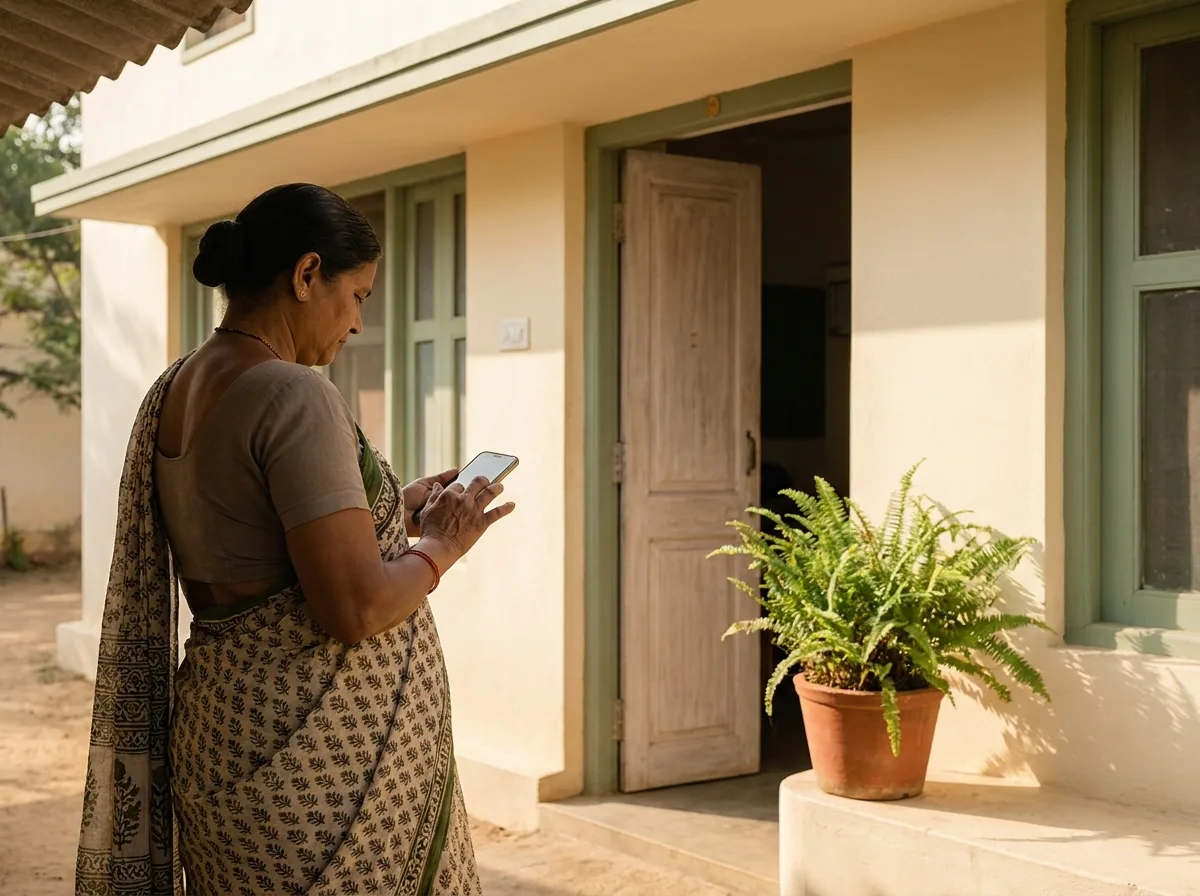
A clinic chatbot in Tamil: the status reply, in Tamil script
When a Tamil-script patient asks where they are in the queue, the reply is Tamil, not a translation bolted on afterwards: "உங்கள் டோக்கன் A007. உங்களுக்கு முன் 2 பேர், சுமார் 10 நிமிடம். இப்போது A005 பார்க்கப்படுகிறது." That is their token, two people ahead, about ten minutes, A005 being seen now. The English patient gets the same information in English. Neither has to ask twice.
The 2-ahead reminder and the your-turn alert are sent as approved WhatsApp templates in the clinic's chosen language, so they arrive even if the patient has not messaged in hours.
What the chatbot will never do
It never diagnoses. It never suggests a medicine or a dose. It never tells a patient whether their symptom is serious. Those questions go to a human, and the chatbot says so plainly. This is a hard boundary, not a setting, because a clinic's WhatsApp number is a clinical channel and the assistant is a receptionist, not a doctor.
Every conversation is visible to your staff on the dashboard, every token can be changed or cancelled by reception with one tap, and the receptionist can always step in on the same WhatsApp thread.
A finished clinic chatbot, not a chatbot toolkit
WhatsApp business platforms sell the messaging pipe and a flow builder. You still have to design the queue: token numbering, wait estimation, the 2-ahead trigger, the display, walk-ins, cancellations, the daily limit. That is months of work and it is the part that goes wrong. TOKENN is the finished clinic assistant: the queue logic, the languages, the dashboard and the TV display are already built, and the chatbot is the front of it.
It runs on Meta's official WhatsApp Cloud API on your clinic's own number. If you already have a WhatsApp Business account, connecting takes about ten minutes; if not, we do the Meta setup with you on a call. The setup guide covers both paths.
What a clinic does configure is short and takes about twenty minutes: the hours each queue opens and closes, the days it is shut, how far ahead patients may book, how many patients ahead should trigger the reminder, and whether replies follow the patient's language or stay fixed in one. Departments come later, if a second doctor or a lab counter needs its own line. There is no flow to draw, no intents to train and no script to write, because the conversation a clinic queue needs is the same conversation in every clinic.
Where the chatbot hands over to a human
Three places. A medical question, always. An unclear request after one clarifying question. And anything the clinic has not told it, such as a doctor's leave day it does not know about. In each case the patient is told to contact reception, and the receptionist sees the thread. The point is not to replace the front desk; it is to take the repetitive four-fifths of messages off it so the desk can handle the rest properly.
For patients who will never message, nothing changes: reception issues a walk-in token in two taps and it joins the same queue.
A Hindi WhatsApp chatbot for doctors, tested in your patients' shorthand
Before going live, send the chatbot the exact phrasing your own patients use, not textbook sentences. In a Tamil clinic that means "doctor irukkangala inniku?", "vera doctor irukaangala?" and a bare "token venum" with no other context. In a Hindi clinic, "doctor available hain kya", "mera number kab aayega" and "cancel karna hai" on its own. A chatbot that handles the textbook form but stumbles on the shorthand quietly frustrates exactly the patients it was built for, so five minutes of testing in real phrasing before the first OPD is worth more than any demo.
Misspelled, one-finger, three-language messages
Owners often ask about the patient who types with one finger, misspells half the words and mixes three languages in one sentence. For an Indian clinic that is the everyday case, not the edge case, and it is what the assistant is built for: a garbled but recognisable "docter irukanga evlo neram" is understood the same as a cleanly typed one. If a message genuinely cannot be classified, the assistant asks one short question rather than guessing, so a confusing message never silently books the wrong thing.
What to tell reception before launch
The most common launch mistake is not telling staff what changes for them. Reception should know three things before the first patient books: they can still issue a walk-in token exactly as before; every WhatsApp booking appears on the dashboard the instant it happens, so there is no separate list to check; and when the chatbot hands a message over, it appears flagged on the dashboard, not buried in a chat log. Clinics that skip this five-minute briefing have a rocky first day, not because the chatbot fails but because staff do not yet trust it and double-check every booking by hand. By the end of the first week, after a few hundred correct tokens, the habit fades on its own.
What a clinic WhatsApp chatbot costs
The chatbot comes with every token, at ₹1 per patient. WhatsApp messages are included in the token; there is no separate message bill. There is no per-language charge and no hardware. Start with 150 tokens for ₹149; nothing expires, so you can watch it handle a real morning of Tamil, Hindi and English before paying anything. Details are on the pricing page.
See how it fits a pediatric practice, where parents are the ones messaging.
Frequently asked questions
Which languages does the clinic chatbot understand?
Every major Indian language, including Tamil, Hindi, Telugu, Kannada, Malayalam, Marathi, Bengali, Gujarati and Punjabi, plus English and code-mixed Tanglish and Hinglish.
Does it reply in the patient's language?
Yes. It replies in the language and style the patient wrote in, or in a fixed language if you set one for the clinic.
Can the chatbot give medical advice?
No. It books tokens, checks status and cancels. Medical questions are always handed to reception or the doctor.
What happens if it does not understand a message?
It asks one short clarifying question. If it is still unsure, it points the patient to reception, and your staff see the thread.
Does it handle voice notes?
It asks the patient to type instead, rather than guessing at a transcription.
Do I need a separate WhatsApp platform subscription?
No. The WhatsApp connection, the queue logic and the chatbot are all part of TOKENN, on your clinic's own number.
Try TOKENN for your clinic
₹1 per patient · start with 150 tokens for ₹149 · nothing expires · no hardware · set up in 10 minutes. See pricing.
See also
Clinic token system: a walk-in number in two taps, online token booking for the rest →
Queue management kiosk alternative: the same token queue on WhatsApp and a TV, without the machine →
Pediatric clinic token system on WhatsApp: sick children wait at home, not in the room →