Gynecology clinic queue management on WhatsApp: numbers, never names
Gynecology clinic queue management is judged on what it does not say out loud. Gynecology is the specialty where the queue tool's defaults can quietly betray patients. Calling out a full name on a waiting-room display, sharing a phone number on a public board, sending a reminder that mentions the visit reason: each is a small thing the patient notices, and not always forgives.
A gynecology clinic token system that is private by default
The number is what is announced out loud: the board speaks the token and never a name, in every clinic. The screen itself lists the patients who are next, and a gynecology clinic can switch that to token numbers alone with one setting, so nothing in the room identifies who is waiting or why. Phone numbers and visit reasons never appear on the public board at all.
WhatsApp reminders are written generically ("your turn at TOKENN clinic in ~15 minutes") so a partner glancing at the patient's phone doesn't learn anything she hasn't chosen to share.
Turn that switch on and the board carries nothing but numbers. No diagnosis in a message either. Just a token.
A women's clinic appointment system in India for antenatal visits
Pregnant patients follow a 10–14 visit ANC schedule across nine months. The intervals get tighter as the due date approaches: monthly, then fortnightly, then weekly. Missing the 28-week visit isn't a "she'll come next week" issue; it's a clinical risk. Which visit is due when is clinical scheduling and stays in your antenatal records; TOKENN sends nothing between visits. What it changes is each visit itself: a token by message, an honest wait, and a chair only when it is nearly her turn.
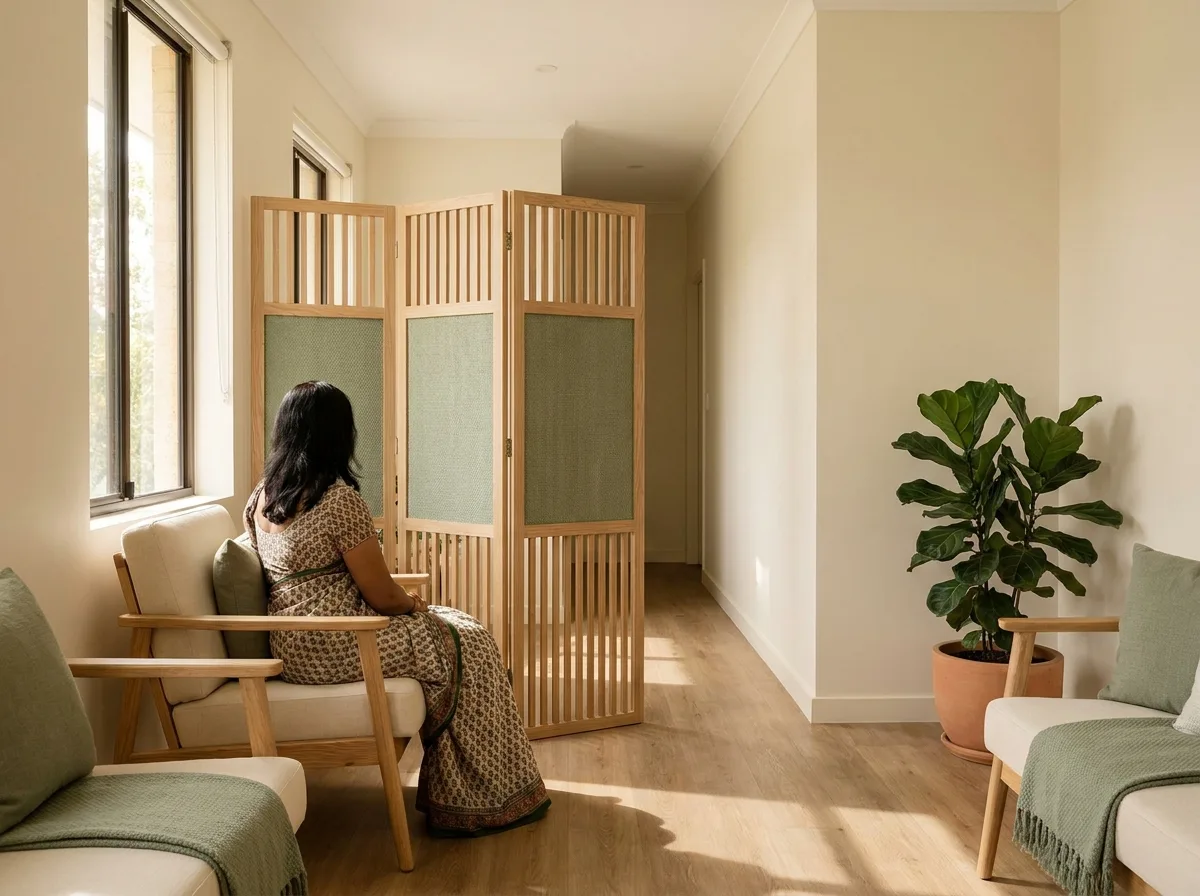
Female-staff preferences
Many patients ask for a female receptionist, female ultrasonographer, or female translator at the desk. Run the female doctor or technician as her own queue; a patient who asks for her books that queue from the start, on WhatsApp or at the desk, with no awkward negotiation at the counter.
The postpartum and post-procedure follow-up window
Beyond the antenatal schedule itself, the six-week postpartum check and any post-procedure follow-ups (after a D&C, a hysteroscopy, or a minor surgical procedure) carry real clinical importance and are easy for an exhausted new mother or a recovering patient to deprioritise. Keeping those windows is your practice's work; TOKENN sends nothing between visits. What it removes is the cost of the visit itself, so a patient juggling a newborn books a token by message and is in the room for minutes, not a morning.
Handling walk-in gynecological emergencies discreetly
A patient arriving with heavy bleeding, severe pain, or a suspected miscarriage needs to be seen urgently, and needs that urgency handled without a public conversation at the reception desk about why. TOKENN's priority override lets staff move such a patient to the front with one discreet tap, and the same reason-free display and reminder system that protects routine visits protects this moment too: nothing about the override reveals to the rest of the waiting room why a particular token jumped the queue.
Fertility patients are in the clinic constantly
Fertility treatment involves a tightly timed sequence of monitoring visits: ultrasounds and blood tests scheduled around a patient's cycle, sometimes with only a day or two of flexibility. The protocol and its timing belong to the clinic and its records; TOKENN neither holds nor schedules them. What it does address is the other cost these patients carry: they are in the clinic constantly, often before work, already under significant emotional strain. A booking that takes two taps and a wait they can plan around is a small kindness repeated many times over a cycle.
Screening and contraception visits, without announcing them
Routine cervical and breast cancer screening, and periodic contraception reviews, are easy for patients to let slide, not out of carelessness, but because no urgent symptom pushes them back through the door. Reaching out to those patients is your practice's work, not something TOKENN does. What it protects is discretion once they come: the board calls the token and never the reason, the screen can be set to numbers alone, and the messages a patient receives say nothing about why she is there.
Coordinating with a lab for hormone panels and pregnancy tests
Many gynecology visits depend on lab results (hormone panels, pregnancy tests, STI screens) that need to come back before a follow-up consult can meaningfully happen. TOKENN's awaiting-report lane, used elsewhere for consult-lab-review loops, applies directly here: a patient sent for bloodwork is parked in the queue rather than requiring a fresh token, and returns to the same consult once results are ready, with the same privacy protections following the token throughout.
Getting a gynecology practice set up with privacy defaults in place
Setup for a gynecology clinic starts the same way as any other practice: a queue, a display, and a WhatsApp number. The one extra step is the switch in Settings that takes patient names off the waiting-room board, which we would turn on before the first token is issued. The messages patients receive are generic by design and never name a visit reason. Most practices are issuing tokens the same day.
Frequently asked questions
Can we keep patient names off the waiting-room display?
Yes. One setting takes names off the board, leaving token numbers alone; the spoken call never uses a name in any clinic. Names stay on the staff dashboard, where reception needs them.
Can we route patients to specific staff?
Yes. Run each doctor or technician as their own queue and the patient books the one she wants, on WhatsApp or at the desk.
Which privacy protections are automatic and which are a setting?
Automatic everywhere: the spoken call uses the token only, and reminders never name a visit reason. A setting: hiding patient names on the board itself, which a gynecology clinic should switch on during setup.
Can we schedule postpartum and post-procedure follow-up reminders?
No. TOKENN sends no reminders between visits; those windows stay in your records. On the day, the patient gets a token by message and the usual two-ahead and your-turn messages.
Can an urgent gynecological walk-in be prioritised discreetly?
Yes. The priority override moves them to the front with one tap, and the same privacy protections apply, so nothing is revealed to the rest of the room.
Can we coordinate tightly-timed fertility or IVF monitoring visits?
The protocol timing stays with your clinic: TOKENN does not schedule future visits. It can run fertility monitoring as its own queue so these patients move quickly and are not sitting in a general OPD line before work.
Try TOKENN for your clinic
₹1 per patient · start with 150 tokens for ₹149 · nothing expires · no hardware · set up in 10 minutes. See pricing.
See also
Polyclinic software for multi-doctor clinics and group practices: a live queue per doctor →
Token system vs appointment system for clinics: which one fits your OPD →