Dental clinic queue management on WhatsApp: one queue per chair
Dental clinic queue management has one problem a GP never has: the chair. Dental clinics live and die by appointment honoured. A 9 AM root canal that no-shows costs you an hour of chair time you can't get back. The fix isn't a fancier calendar: it's a reminder system that actually reaches patients on the channel they already check fifty times a day.
Why a dental appointment system in India breaks by 11 AM
Dental visits are longer (30–90 min) and have a hard cost when a chair sits empty, so a queue built for five-minute GP consults misreads the whole day. TOKENN gives each chair its own queue with its own realistic minutes-per-patient, so an hour-long root canal and a ten-minute check produce different, honest wait estimates instead of one average that is wrong for both. Patients book a token on WhatsApp for the day and get a reminder when they are two ahead.
Patients book a token on WhatsApp for the day rather than phoning during a procedure, and can reply to cancel if something comes up: which closes the queue up behind them instead of leaving a chair idle while everyone waits for someone who is not coming.
When a procedure overruns, waiting patients stay informed
A root canal planned for 30 minutes takes 55, and a paper system has no way to tell the patients who haven't arrived yet. TOKENN recomputes wait estimates from the actual chair time as the day unfolds, so when a waiting patient checks their status on WhatsApp, the answer reflects reality. The 2-ahead and your-turn alerts fire on real queue position, not the morning's optimistic schedule: patients arrive when the chair is actually free.
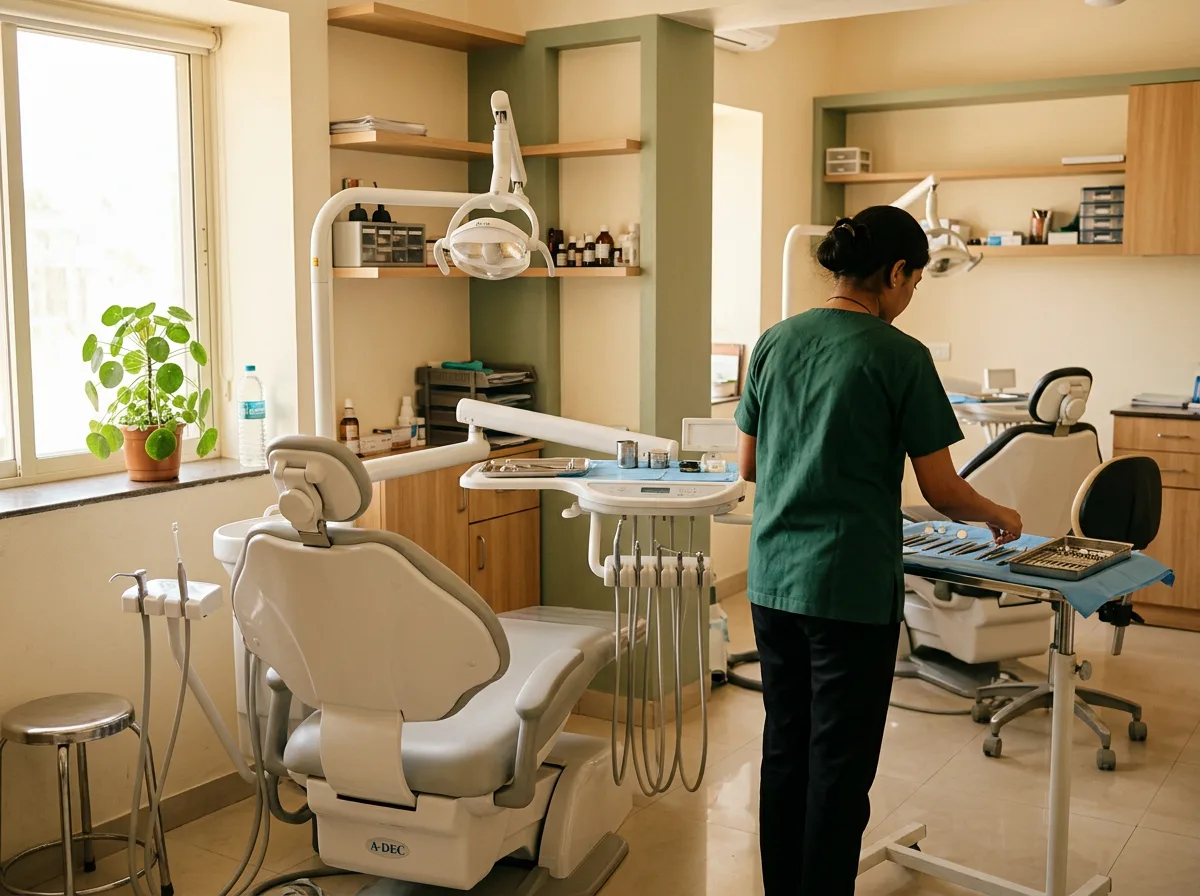
A dental clinic token system with one queue per chair
Run a separate queue per chair, hygienist, or doctor: each department gets its own token series (A-, B-, C-…), its own working hours, and its own scan-to-book QR code. Reception sees every chair's queue on one dashboard; a staff member assigned to one chair sees only theirs. The waiting-room display shows each chair's now-serving token side by side.
Pause a patient, serve the next, recall in one tap
Waiting for anesthesia to set, or for an X-ray to come back? Mark the patient "sent for tests": their token parks in an awaiting-report lane while the next patient takes the chair. When they're ready, one tap recalls them on the same token. Nobody re-queues, and the chair never idles.
Why recalled patients still do not come in
Dental retention is recall: bringing patients back at six months for cleanings, post-RCT checks, denture adjustments. That list, and the chasing, stays with your practice: TOKENN holds no patient history and sends no messages outside the day a patient is in the queue. What it removes is the reason a recalled patient does not come. A cleaning is a short appointment, and a short appointment behind a two-hour wait is one people postpone indefinitely.
Emergency dental pain walk-ins
A patient in acute dental pain (an abscess, a broken tooth, uncontrolled bleeding after an extraction elsewhere) cannot be told to wait behind a full slate of scheduled appointments. TOKENN's priority override handles this the same way it does across every specialty: reception taps "Call now," the patient is seen next, and everyone else's token simply shifts back one place with an updated, honest wait estimate rather than an unexplained delay.
Insurance pre-authorisation and treatment-plan follow-ups
Larger dental procedures (implants, crowns, orthodontic work) often require insurance pre-authorisation or a multi-visit treatment plan spanning weeks. Patients waiting on an insurance approval, or partway through a staged treatment plan, are easy to lose track of manually. Where each patient stands in that plan is a note in your records, not something TOKENN tracks; it sends nothing between visits. What it does is make the next step cheap to keep: a token by message, an honest wait, and a walk-in slot if the approval lands and the patient turns up the same day.
Handling anxious patients and pre-visit reassurance
Dental anxiety is common enough that many practices build their entire patient-communication style around managing it, and an unpredictable wait, sitting in a lobby anticipating a procedure, is one of the worst possible experiences for an already anxious patient. TOKENN's honest wait estimate lets an anxious patient time their arrival to minimise the anticipatory wait, arriving close to their actual turn rather than sitting in the waiting room dwelling on the upcoming procedure for longer than necessary.
Pediatric dental visits and the parent-in-the-loop reality
Children's dental visits usually involve a parent booking on the child's behalf, waiting alongside them, and sometimes needing to be reassured themselves about the procedure. TOKENN's walk-in and booking flows work identically whether the token belongs to an adult or a child, with the two-ahead and your-turn messages going to whichever WhatsApp number the parent gives, so a family with an adult filling and a child's cleaning on the same morning follows both tokens in one familiar thread.
Dental clinic software or a dental queue: which one is this?
Dental clinic software usually means the practice suite: patient records, charting, imaging, treatment plans and billing, sold at a few thousand rupees a month. TOKENN is not that. It is the queue that runs beside it: the token a patient gets on WhatsApp, the live wait per chair, the two-ahead nudge, and the display in the waiting area. The two do not need to talk to each other, because the queue only holds who is next.
A dental clinic in India that already has practice software adds TOKENN for the part that software does not do, which is reaching the patient before they arrive. A clinic that has neither should start with the queue, because it is the part patients feel on the first day, at ₹1 a patient rather than a licence.
Frequently asked questions
Can we block out time for long procedures?
Yes. Run long procedures as their own queue with its own minutes-per-patient; the estimates and reminders for that queue follow the real pace.
Can each chair or doctor have its own queue?
Yes. Departments give every chair its own token series, hours, and QR: reception sees all of them on one dashboard.
What happens to waiting patients when a procedure runs long?
Wait estimates recompute from actual chair time, and the 2-ahead/your-turn alerts fire on real queue position, so patients arrive when the chair is genuinely free.
Can a patient in acute dental pain be seen ahead of scheduled appointments?
Yes. One tap moves them to the front, and everyone else's token shifts back with an updated, honest wait estimate.
Can we track multi-visit treatment plans like implants or crowns?
No. Treatment plans and what is due next stay in your records; TOKENN sends nothing between visits. Each visit in the plan is a token booked by message with an honest wait.
How long does it take to set up a multi-chair dental clinic?
Most clinics configure a queue per chair, each with its own hours and chair time, and go live with WhatsApp booking the same day.
Try TOKENN for your clinic
₹1 per patient · start with 150 tokens for ₹149 · nothing expires · no hardware · set up in 10 minutes. See pricing.
See also
OPD queue management system with WhatsApp token booking →
WhatsApp token booking for clinics: a queue number by message, no app →
Paper token vs digital token system for clinics: what a small clinic actually gains →