Cardiology clinic queue management on WhatsApp: ECG, echo and consult in step
Cardiology clinic queue management is three short queues pretending to be one long one. Cardiology is chronic care in disguise: a typical clinic sees the same hypertension or post-MI patient quarterly for life. Which means the same person passes through your waiting room dozens of times over a decade, cycling between the ECG bed, the echo machine and the consult room on each visit. TOKENN is built for that day: three stations, one live queue each, and a patient who knows when to walk in.
Cardiac clinic patient flow: ECG, echo and the consult room
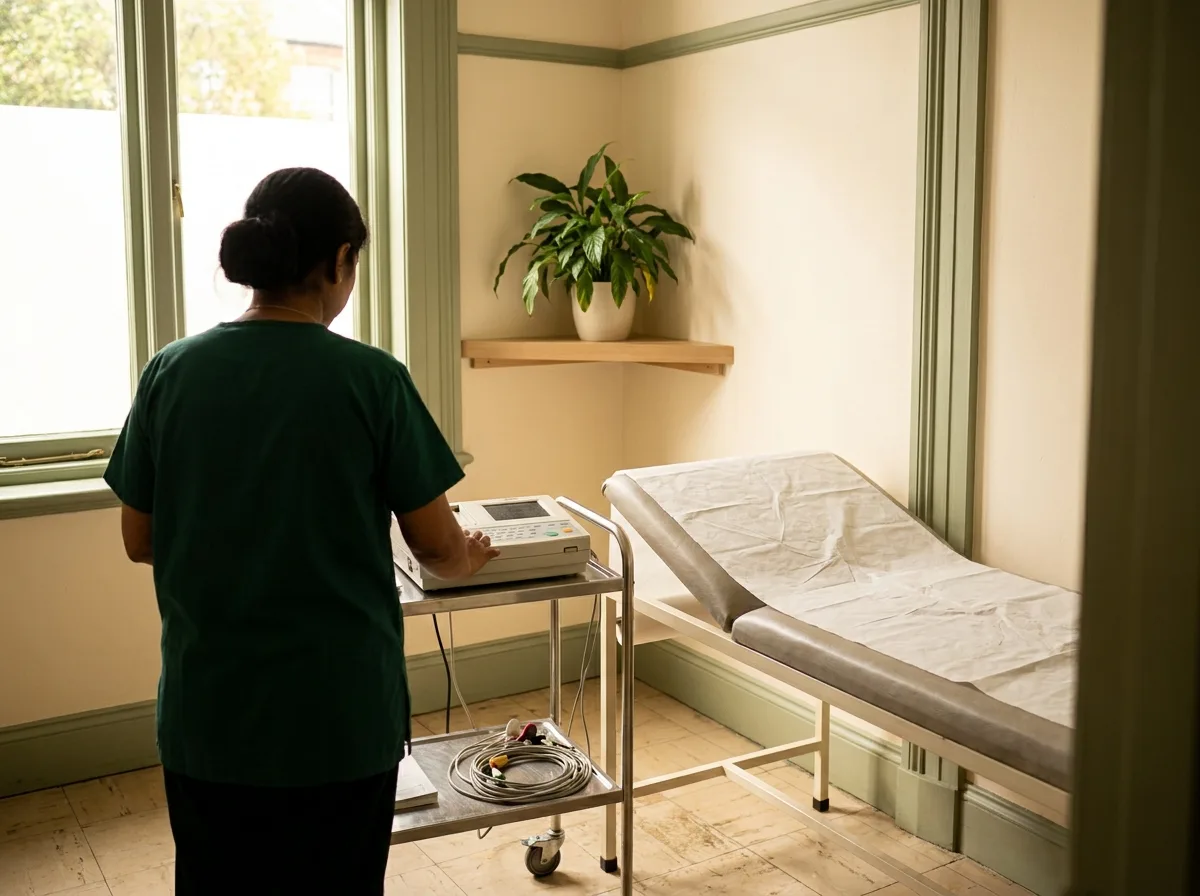
Most cardiology clinics have one ECG bed, one echo machine, and two consultation rooms. A new patient cycles through ECG → echo → consult; a follow-up may need only the consult. Walk-ins for chest-pain assessment need ECG within minutes. TOKENN models each as its own queue so the consult room doesn't stall waiting for the echo to finish.
A cardiology clinic token system for five-minute refill reviews
Anti-hypertensives and statins are prescribed in 30–90 day cycles, so a large share of a cardiology clinic's volume is patients coming in for what amounts to a five-minute review. Those are exactly the visits a patient abandons when the waiting room looks full at 9 AM. Deciding who is due is your clinical call and stays in your records; what TOKENN changes is that when the patient does come, they book a token on WhatsApp, watch their position move, and walk in at their turn instead of sitting for two hours to be seen for five minutes.
Emergency walk-ins
A patient with chest pain walking in needs ECG now, not after the morning queue. Reception taps their token and hits "Call now": they are seen next, ahead of the line, and whoever was up next returns to the front. If they need tests first, "Send for tests" parks their token and brings them straight back for review when the report is ready.
A cardiology appointment system in India for post-MI follow-ups on a schedule
Patients recovering from a myocardial infarction, angioplasty, or bypass surgery follow a structured monitoring schedule: typically at 2 weeks, 6 weeks, 3 months, and 6 months post-event. The schedule itself is clinical and lives in your records. What it produces operationally is a steady stream of patients arriving for short, high-stakes checks, often still anxious and often accompanied by family. Each of those visits is a WhatsApp token rather than a phone call to reception, and an honest wait estimate rather than an open-ended sit in a full room.
Coordinating with diagnostic labs for cholesterol and cardiac markers
Routine cardiac care depends on periodic lipid panels and, in some cases, cardiac biomarker tests done at an external or in-house lab before the consult. A patient sent for tests mid-visit does not need to rejoin the back of the queue when they return: reception taps "Send for tests" and their token moves to an awaiting-report lane, then comes back badged as a quick review rather than a fresh consult. TOKENN manages that movement through the room only. Lab results themselves stay wherever your lab and records already keep them: TOKENN holds no reports and no clinical values.
Anticoagulation and INR patients come back far more often
Patients on warfarin or similar anticoagulants require regular INR blood tests to keep their dose in a safe therapeutic range: sometimes weekly during a dose adjustment. Operationally this is the highest-frequency visitor a cardiology clinic has: the same person, many times a month, for a test and a brief review. A booking flow that takes two taps on WhatsApp rather than a call to a busy front desk compounds in their favour more than for any other patient on your list.
Cardiac rehabilitation sessions alongside the consult queue
Patients enrolled in a structured cardiac rehabilitation program attend supervised exercise sessions several times a week for months, a rhythm closer to physiotherapy than to a consult schedule, and one that would swamp a shared queue if it ran through the same line as OPD. Rehab can run as its own department with its own hours and its own pace, so a rehab session never sits behind a full consult queue and a consult patient never waits behind a rehab block.
Device checks: short visits that should not cost a whole morning
Patients with pacemakers, defibrillators, or implantable loop recorders need periodic device interrogation visits to check battery life and function, typically every 3 to 12 months. The interrogation itself takes minutes, which makes it the visit patients resent most when it costs them half a day in a waiting room, and the one they are most tempted to postpone. Running device checks as their own queue with a realistic per-patient time keeps them moving at the pace they actually take rather than at consult pace.
Getting a cardiology practice set up quickly
Setup for a cardiology clinic centres on configuring the ECG and echo stations as their own queues alongside the consult room, each with its own realistic minutes-per-patient so the wait estimates mean something. Most practices are issuing tokens the same day. Nothing clinical needs to move: TOKENN sits alongside whatever records system you already run rather than replacing it.
Frequently asked questions
Can we route ECG and echo to separate technicians?
Yes. Per-station queues, one shared dashboard.
Can urgent walk-ins jump the queue?
Yes. Tap the patient on the queue and choose "Call now" to see them next, ahead of the line. The patient who was up next returns to the front.
Can we run ECG, echo and rehab as separate queues?
Yes. Each is its own department with its own hours, pace and token prefix, all on one dashboard.
Why does the waiting-room experience matter more in cardiology than elsewhere?
Because these patients return for years and are often anxious on arrival. A clinic where every routine review costs a morning is one patients quietly stop returning to, and in cardiology that drift carries real clinical risk.
Do frequent-visit patients like INR checks need anything special?
No. They book the same way every time, in two taps on WhatsApp. The benefit is simply that it compounds: the same short booking, many times a month, instead of a call to a busy front desk.
Can pacemaker and device checks run as their own short queue?
Yes. Give device checks their own queue with a realistic minutes-per-patient, so a ten-minute interrogation is not estimated like a full consult.
Try TOKENN for your clinic
₹1 per patient · start with 150 tokens for ₹149 · nothing expires · no hardware · set up in 10 minutes. See pricing.
See also
A queue management system for hospitals in India: built for the OPD wing →
WhatsApp token booking for clinics: a queue number by message, no app →
Paper token vs digital token system for clinics: what a small clinic actually gains →