Diagnostic lab queue management on WhatsApp: the 7 AM collection wave, spread out
Diagnostic lab queue management starts at seven in the morning, when every fasting patient arrives at once. Diagnostic labs have two queues, not one: the morning sample-collection rush, and the afternoon report-pickup. Both crowd the counter at the same hour. TOKENN takes on the first one, the collection queue, and gives fasting patients an honest wait instead of a line that doesn't move.
A pathology lab token system for the 7 AM sample collection wave
Lab patients are fasting and tired. They show up at opening time because they don't know any better, and they wait in a line that doesn't move predictably. A queue with a real ETA changes that conversation: patients arrive in the 30-minute window when their turn is close, not at 7 AM sharp.
Where TOKENN stops: reports stay in your lab system
TOKENN is the queue layer, not a report delivery system. It holds no reports, no results and no clinical values: only the token, the queue position and the patient's WhatsApp contact for that day. Whatever your lab already uses to generate and deliver reports keeps doing that job. What changes is the collection visit in front of it: counter staff spend the morning processing collections instead of answering "how much longer".
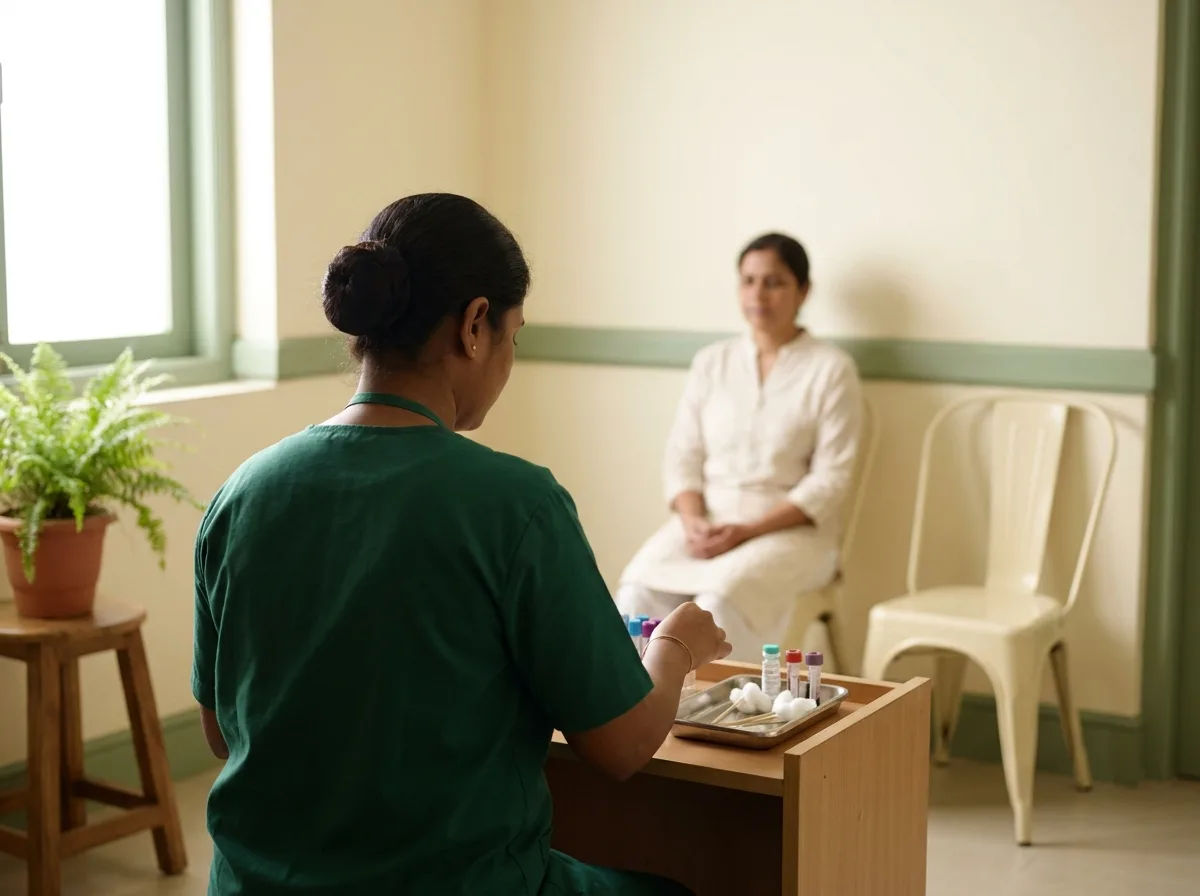
Pathology lab management software, and the part it leaves out
Searching for pathology lab management software usually turns up a LIMS: barcode and sample tracking, analyser interfacing, result entry, report templates, billing and NABL paperwork. TOKENN is not one of those and does not try to be. It never sees a sample, a value or a report.
What a LIMS does not manage is the hour before the sample exists. It starts counting when the vial is barcoded, so the queue at the collection counter at 7 AM, the fasting patient with no idea how long the wait is, and the counter staff answering the same question forty times sit outside it entirely. That is the gap TOKENN fills, and it fills it beside whatever lab software you already run, with nothing to integrate and no data moving between the two.
So the honest answer for a lab comparing options: if you need results and reporting, buy lab management software. If the collection counter is what is actually breaking, that is a queue problem, and it costs ₹1 per patient to fix without touching the system your reports live in.
Fasting patients need a different kind of honesty
A patient fasting since the previous night is not a patient who tolerates vague waiting well, every extra minute compounds the discomfort of hunger and low blood sugar on top of the usual anxiety of a blood draw. TOKENN's live wait estimate matters more here than in almost any other specialty: instead of a fasting patient sitting indefinitely "somewhere near the front," they get an honest number and can choose to step outside for fresh air rather than sit in a stuffy lobby, arriving back exactly when called.
A sample collection queue for tests that need different handling
Not every sample collection is the same. A routine blood draw takes two minutes; a glucose tolerance test requires the patient to stay on-site for two hours with multiple draws; a semen analysis or stool sample needs a private room rather than an open counter. Run the long collections as their own queue: a glucose tolerance test or a timed sample takes its token in the long-stay queue with its own minutes-per-patient, so the quick blood-draw line keeps moving and staff see at a glance who is in for a longer stay.
Corporate and bulk health-checkup camps
Labs running corporate health checkups or bulk screening camps face a burst of 50-100 patients arriving within a narrow window, all needing the same handful of tests. TOKENN's walk-in issue flow handles this volume without collapsing: each employee gets a token in seconds at the desk, joins the live queue, and the lab's regular patients are not pushed aside because the camp is modelled as a separate, time-boxed queue rather than mixed haphazardly into the daily line.
A diagnostic lab appointment system in India for patients referred from a dozen clinics
Standalone labs typically receive patients referred from a dozen or more clinics rather than walk-ins alone, which means most people arriving at your counter know a doctor's name and nothing about how your lab works. They message the number on the referral slip, and the assistant answers in their own language, collection hours, current wait, and a token if they want one. Staff can note the referring clinic in the visit reason at intake so it is visible on the day's list; TOKENN does not itself report results back or track referral volumes.
Managing urgent, doctor-flagged priority samples
Occasionally a referring doctor needs a result urgently (a suspected sepsis case, a critical electrolyte check before a procedure) and the sample cannot sit in the normal collection queue behind routine walk-ins. TOKENN lets a lab flag a booking as priority at intake, moving it ahead in the collection queue and, where the lab's workflow allows, flagging it for expedited processing so the turnaround matches the clinical urgency rather than the lab's default queue order.
Elderly and mobility-limited patients at the collection counter
Many diagnostic lab patients are elderly, referred for routine monitoring bloodwork tied to a chronic condition, and physically less comfortable standing in a line than a younger patient would be. Being able to sit while their live position updates, rather than stand in a physical queue to hold their place, matters more for this group than almost any other lab visitor. TOKENN's walk-in flow works the same way here as anywhere else: a token issued at the desk, a seat available while waiting, and a live position visible on the display for anyone without a phone to check it themselves.
Getting a diagnostic lab set up on TOKENN
A new lab typically configures its collection queue in the first setup session, and adds a second queue for long collections if it runs them. TOKENN does not track referring clinics. Most labs are live with patients booking collection slots on WhatsApp within the first day of switching over from a purely counter-based system.
Frequently asked questions
Can we handle multiple lab locations?
Yes. Per-location pricing; reach out and we'll set it up.
Can we distinguish a quick blood draw from a longer glucose tolerance test?
Yes. Run the longer tests as their own queue with their own minutes-per-patient, so the quick draws keep moving and staff see who is in for a longer stay.
Can we handle a corporate health-checkup camp without disrupting regular patients?
Yes. Model the camp as its own time-boxed queue, so bulk walk-ins never crowd out the lab's everyday patients.
Can we track which clinic referred each patient?
Staff can note the referring clinic in the visit reason when the token is issued, so it shows on the day's list. TOKENN does not report results back or count referrals per clinic.
Can urgent, doctor-flagged samples be prioritised ahead of routine walk-ins?
Yes. Staff can flag a booking as priority at intake, moving it ahead in the collection queue for faster processing.
Do report pickups run in the same queue as sample collection?
No. Pickup runs as its own queue with its own pace, so the afternoon counter is not blocked by the morning's draws.
Try TOKENN for your clinic
₹1 per patient · start with 150 tokens for ₹149 · nothing expires · no hardware · set up in 10 minutes. See pricing.
See also
A queue management system for hospitals in India: built for the OPD wing →
WhatsApp chatbot for clinics in Tamil, Hindi and English →
Queue management kiosk alternative: the same token queue on WhatsApp and a TV, without the machine →